Industrial Pump Group Control & Constant-Pressure Water Supply
PLC, VFD and SCADA integration for multi-pump sequencing, constant-pressure control, energy optimization, fault bypass and remote pump-room operation.
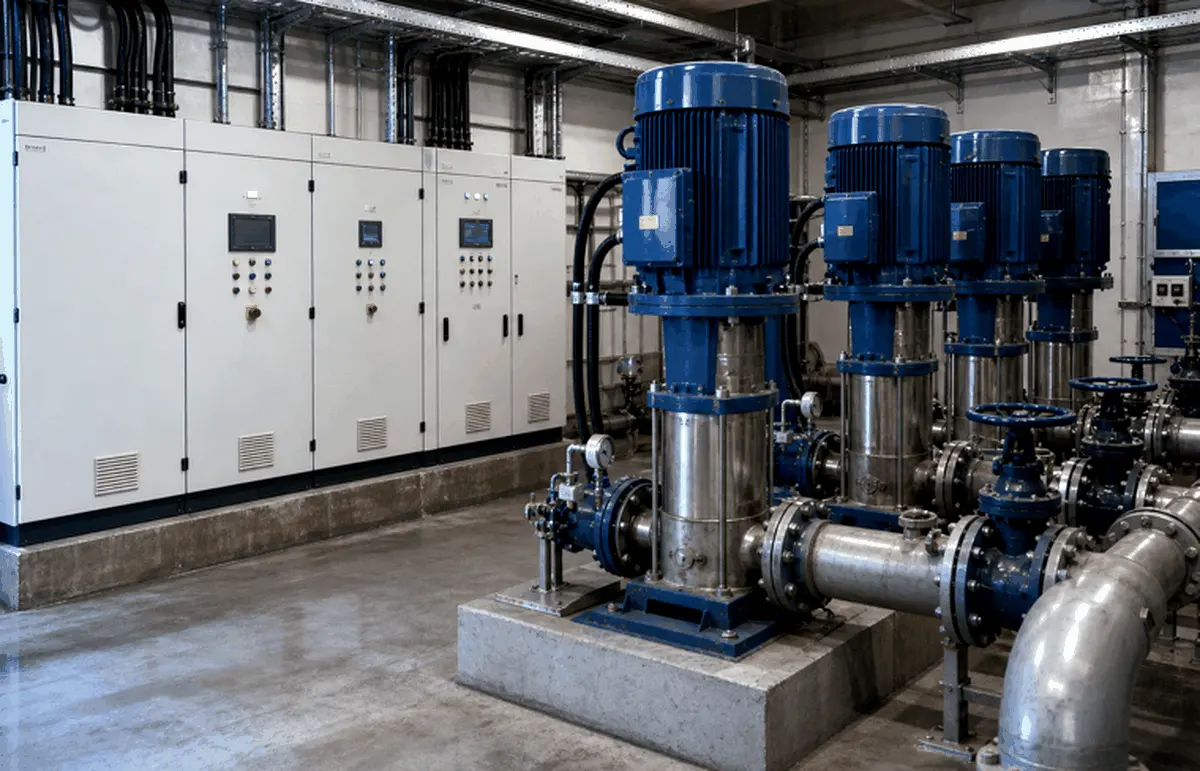
Pain points
- Water pressure fluctuates as demand changes or pumps switch
- Pumps cycle frequently, run inefficiently or accumulate uneven operating hours
- Operators rely on manual switching and cannot see system performance remotely
Meshox solution - scope of work
Technical approach
1. Measure before changing equipment
We compare pressure, flow, motor load, frequency, valve position, starts and operating hours to distinguish hydraulic, equipment and control causes.
2. Define stable operating boundaries
Pressure targets, minimum flow, permitted pump range, staging thresholds and fail-safe behavior are confirmed with the owner and process team.
3. Commission the whole pump group
PID, lead/lag, rotation and fault bypass are verified as one system across representative demand conditions, not tested as isolated devices.
Implementation scenarios
System architecture
Field Devices
Control Execution
Supervisory
Remote O&M
Applicable industries
Problems this service is designed to address
Why Is Pump Energy Consumption Too High?
Diagnose oversized pumps, throttling loss, poor sequencing and unsuitable pressure targets before planning a pump control retrofit.
Why Does Water Pressure Fluctuate?
Identify sensor, PID, pump sizing and sequencing causes behind unstable water pressure and frequent pressure overshoot.
Why Do Pumps Start and Stop Frequently?
Find the control deadband, tank volume, leakage, sensor and sequencing issues that cause damaging pump cycling.
How Can Multiple Pumps Switch Automatically?
Plan lead/lag, duty rotation, fault bypass, demand staging and manual fallback for a reliable multi-pump control system.
How to Upgrade a Pump Room for Unattended Operation
Define instrumentation, automatic control, alarms, video, communication, remote permissions and emergency response for unattended pump-room operation.
Why Is a Pump Vibrating, Noisy or Cavitating?
Separate hydraulic, mechanical and control causes of pump vibration, abnormal noise and suspected cavitation before changing equipment or VFD settings.
Why Does a Pump Motor Overload or Trip?
Use electrical, mechanical, hydraulic and control evidence to investigate repeated pump-motor overload or protection trips.
Why Does Pump VFD Frequency Keep Hunting?
Diagnose signal noise, PID tuning, pump staging and process-delay causes when a pump VFD continually accelerates and decelerates.
How to Retrofit an Old Pump Control Panel
Plan a staged pump-panel retrofit around wiring verification, I/O migration, motor protection, manual fallback, downtime and commissioning.
How Should Pump Station Alarms Be Managed?
Improve pump-station alarm priorities, delays, suppression, context, notification and response records without hiding real faults.
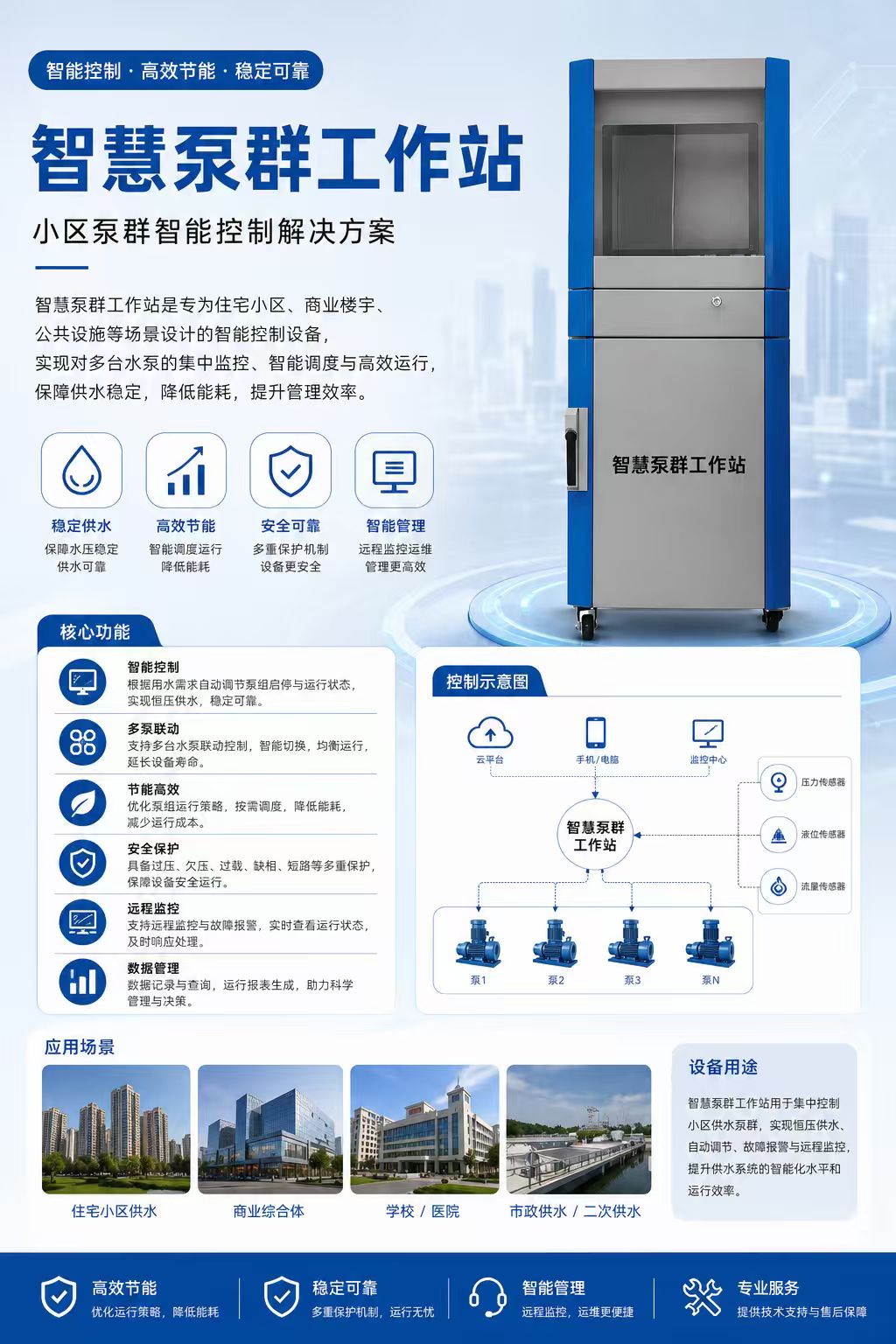
Smart Pump Group Workstation
The physical workstation used to integrate control, HMI, protection, data and optional remote monitoring. Internal configuration is engineered for the actual pump group.
View product platform →Technical guidance
FAQ
Can the existing pumps and pipework be retained?
Usually yes if assessment confirms they can operate safely in the required range. The retrofit can focus on instruments, PLC, VFDs, panels and control logic.
How is energy-saving performance verified?
A baseline and comparable operating periods should be defined, then flow, pressure, energy and operating hours are reviewed together. We do not promise a percentage without site data.
Can the pump room be monitored remotely?
Yes. SCADA can provide status, alarms, trends and reports. Remote-control permissions and network security are designed separately from basic monitoring.
Have a control system, retrofit or integration project?
Start with a project evaluation. An engineer will review your requirements and propose a fitting control solution.