Smart Pump Group Workstation
An engineering-configured workstation that integrates multi-pump control, local HMI, protection, data recording and optional remote monitoring for water-supply and utility pump rooms.
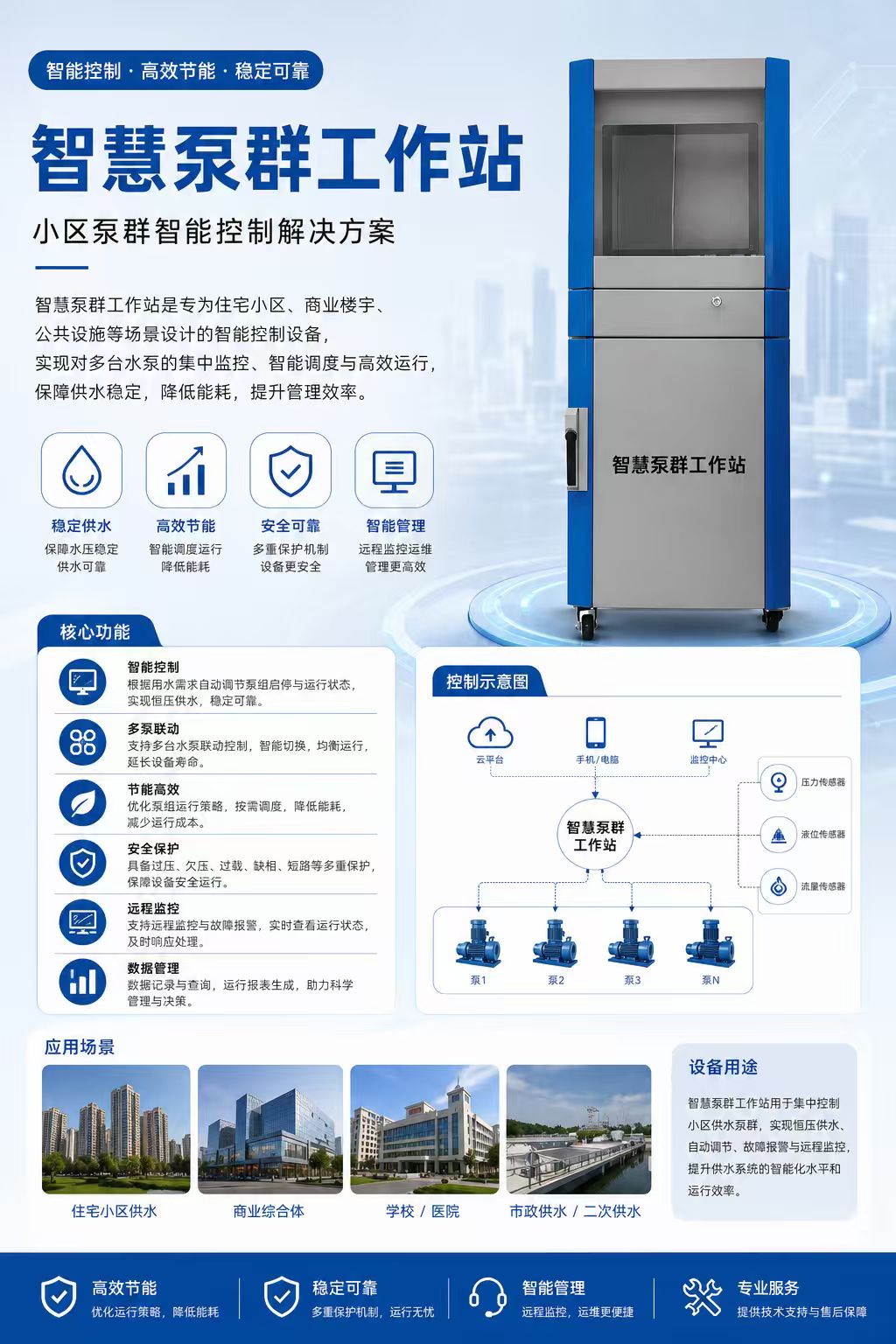
The Smart Pump Group Workstation is the physical control product used to implement a pump-group automation project. Its final I/O, motor circuits, PLC/VFD architecture, protection, communication and enclosure arrangement are configured around the actual pumps and site conditions.
Important configuration note
The page describes a product platform, not a fixed bill of materials. A technical confirmation is required before model, dimensions and electrical specification can be published.
Core functions
- Multi-pump lead/lag, rotation and demand-based staging
- Constant-pressure control using pressure feedback and VFDs
- Local touchscreen monitoring, mode selection and alarm display
- Equipment protection and fault bypass designed for the project
- Operating trends, event records and report-ready data
- Optional remote monitoring with separately designed permissions
Typical signals and equipment
- Pressure, flow and level instruments
- Pump run, ready, local/remote and fault status
- Motor current, frequency and accumulated runtime
- Valve, tank and auxiliary-equipment status where required
Application scenarios
What must be confirmed before configuration
- Not a one-size-fits-all catalog cabinet: motor power, circuit quantity and I/O must be confirmed.
- Energy savings depend on the existing hydraulic system and operating profile; no percentage is assumed.
- Remote control, network security and unattended operation require project-specific risk and permission design.
Problems connected to this product
All problems →Why Is Pump Energy Consumption Too High?
Diagnose oversized pumps, throttling loss, poor sequencing and unsuitable pressure targets before planning a pump control retrofit.
Why Does Water Pressure Fluctuate?
Identify sensor, PID, pump sizing and sequencing causes behind unstable water pressure and frequent pressure overshoot.
Why Do Pumps Start and Stop Frequently?
Find the control deadband, tank volume, leakage, sensor and sequencing issues that cause damaging pump cycling.
How Can Multiple Pumps Switch Automatically?
Plan lead/lag, duty rotation, fault bypass, demand staging and manual fallback for a reliable multi-pump control system.
How to Upgrade a Pump Room for Unattended Operation
Define instrumentation, automatic control, alarms, video, communication, remote permissions and emergency response for unattended pump-room operation.
Why Is a Pump Vibrating, Noisy or Cavitating?
Separate hydraulic, mechanical and control causes of pump vibration, abnormal noise and suspected cavitation before changing equipment or VFD settings.
FAQ
Is this a standard product or an engineered system?
It is a productized workstation with an engineering-configured interior. The enclosure concept and software framework can be standardized, while power circuits, I/O, PLC/VFD selection, protection and communication are confirmed per project.
Can it connect to existing pumps and sensors?
Often yes after a site survey verifies electrical ratings, signal types, equipment condition and control boundaries.
Can it be monitored by phone or a central control room?
Remote monitoring can be configured. Monitoring and remote-control permissions are treated separately, with network and audit requirements defined for the site.
Have a control system, retrofit or integration project?
Start with a project evaluation. An engineer will review your requirements and propose a fitting control solution.