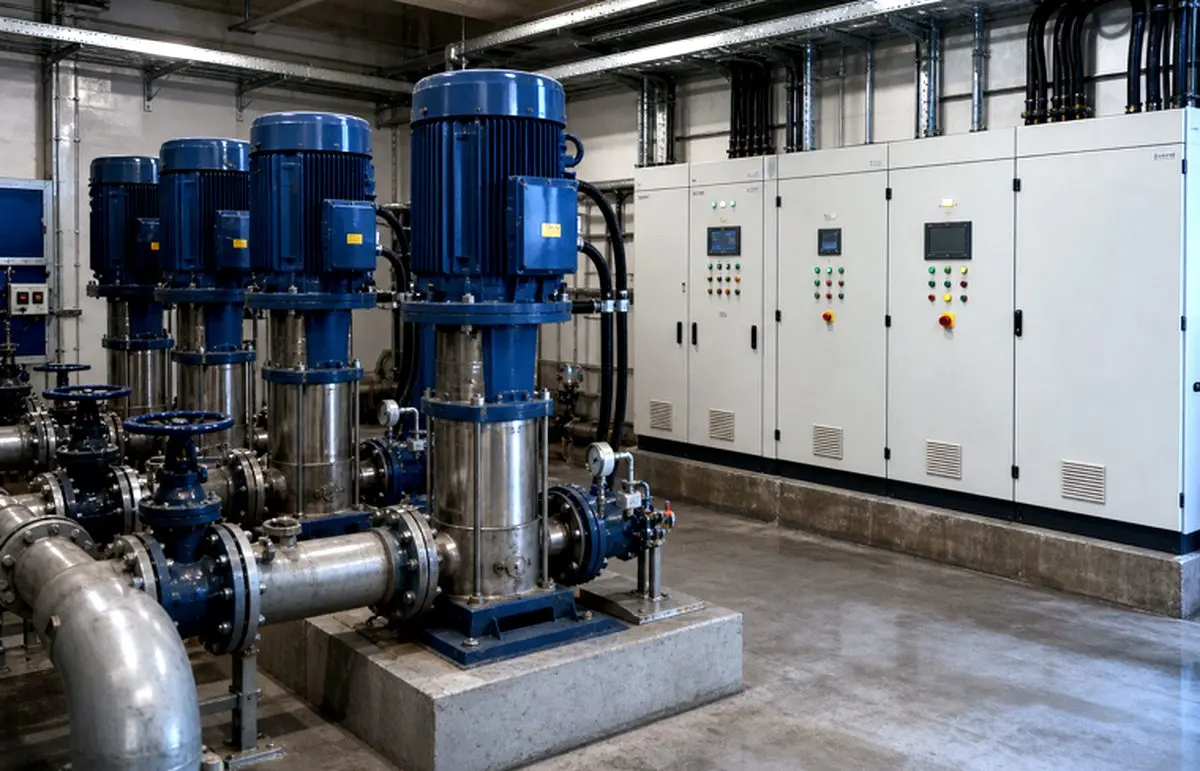
Pump station energy saving comes from trustworthy measurement, pump sequencing, VFD control, pressure target optimization and SCADA reports that track energy per unit volume.
Key Questions
- Which pumps should run together under each flow condition?
- Are pressure targets higher than operations require?
- Can energy savings be measured per unit volume?
Implementation Path
- 1Measure flow, pressure, level, runtime and power.
- 2Tune pump sequencing and VFD speed control.
- 3Use SCADA trends to compare energy before and after changes.
Related Systems and Entities
Measure before optimizing
Energy-saving control starts with flow, pressure, level, pump status, runtime and power data. Without trustworthy measurement, optimization becomes guesswork.
Use VFD control and pump sequencing together
A VFD can reduce speed, but poor pump sequencing still wastes energy. Good automation selects the right pump combination, adjusts speed and avoids inefficient operating zones.
SCADA reports turn savings into management
Trends and reports compare flow, pressure and power over time, showing whether control changes actually reduce energy per unit of water delivered.
FAQ
Does every pump need a VFD?
Not always. The best configuration depends on operating range, redundancy, pump curves and cost. Often only selected pumps need VFD control.
How do we prove energy savings?
Track power, flow and pressure before and after changes, then compare energy per unit volume under similar operating conditions.
Water Treatment & Municipal Automation
PLC control, online instruments, security video, data acquisition, reporting and remote O&M for water plants, wastewater plants and pump stations.