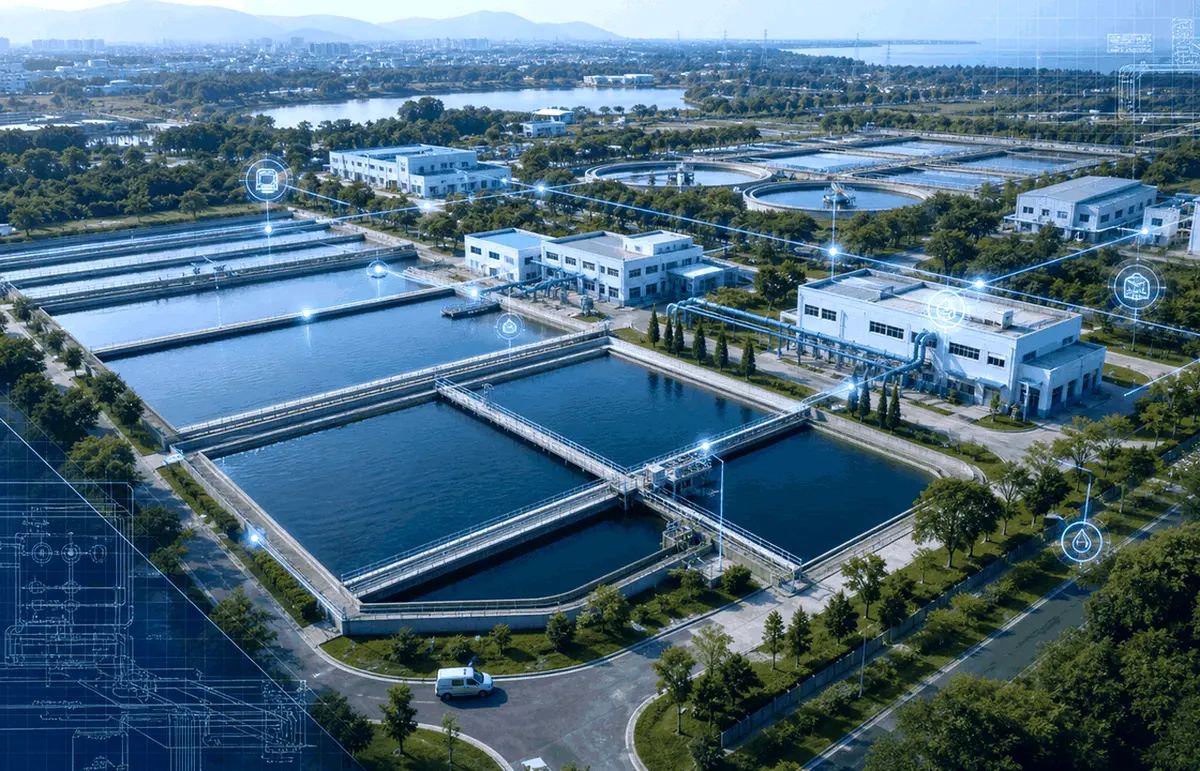
Water treatment automation should combine PLC process control, online instruments, pump-station monitoring, SCADA reporting and remote O&M into one traceable system.
Key Questions
- Which water-quality and flow signals drive automatic control?
- Which pump stations and remote sites must be monitored centrally?
- Which reports are needed for operations and compliance?
Implementation Path
- 1Define process loops for dosing, pumps, blowers and valves.
- 2Validate online instruments and calibration rules.
- 3Deliver SCADA trends, alarms, reports and remote access.
Related Systems and Entities
Process control at the core
PLC-based control handles dosing, pumping, blowers and valves with interlocks tuned to the process. Automatic dosing driven by online water quality, with alarms and manual override, is a typical foundation.
Online instruments and data acquisition
Water quality, flow, level and pressure instruments feed the control system and the record. Correct instrument selection, range matching and calibration determine how trustworthy the whole system is.
Pump stations and distributed sites
Pump stations and outlying sites are brought into the same monitoring model so operators see one consistent view instead of separate local panels.
Reporting, SCADA dashboards and remote O&M
A SCADA dashboard consolidates state, trends and alarms; reporting supports compliance and review; remote O&M reduces manual inspection dependency and supports faster response.
FAQ
Can dosing run automatically by water quality?
Yes. Dosing can be driven by online water quality measurements, with alarms and manual override retained for safety.
Water Treatment & Municipal Automation
PLC control, online instruments, security video, data acquisition, reporting and remote O&M for water plants, wastewater plants and pump stations.