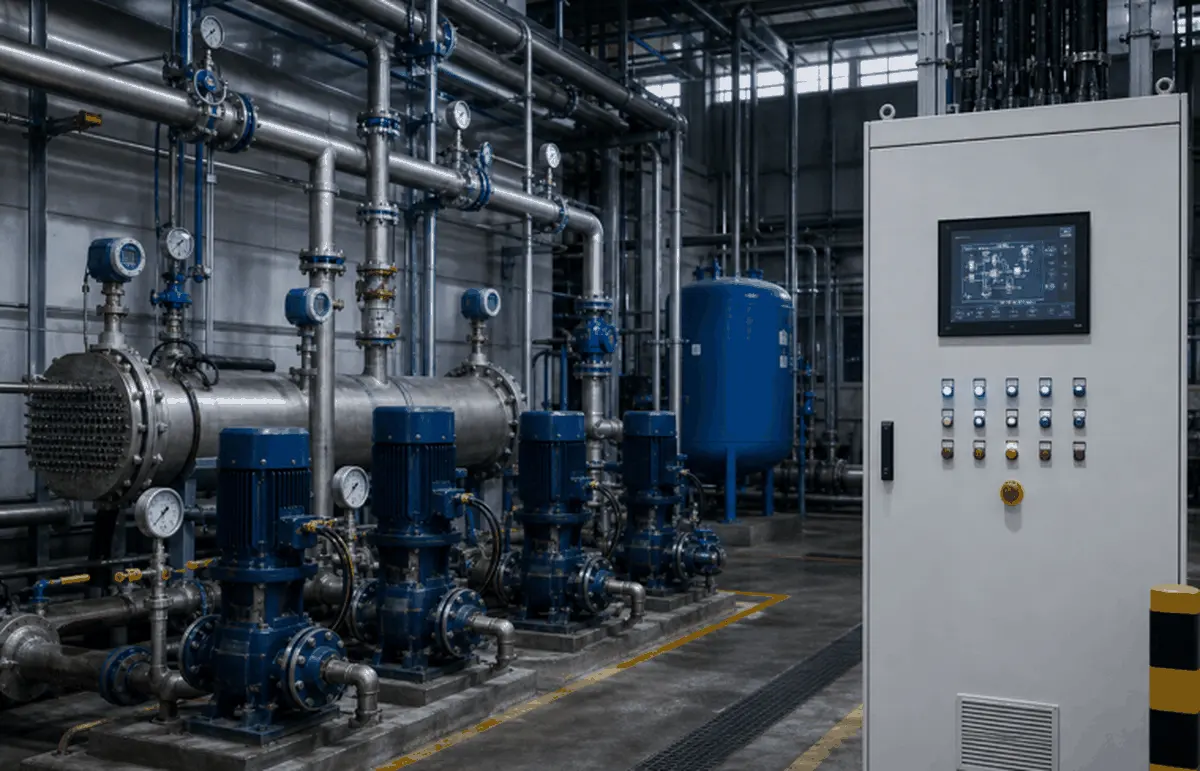
Industrial instrumentation selection should match media, range, accuracy, environment, signal type, maintenance access and the control decision the measurement supports.
Key Questions
- What process condition must the instrument survive?
- What control or safety decision depends on the signal?
- How will calibration and diagnostics be maintained?
Implementation Path
- 1Confirm media, pressure, temperature, corrosion and hazardous area.
- 2Select range, accuracy, output signal and protocol.
- 3Plan calibration, access and spare-parts strategy.
Related Systems and Entities
Match the instrument to the process
Media properties, pressure, temperature, corrosion, vibration, hazardous area and required response time all affect selection. A cheap instrument in the wrong place creates expensive control problems.
Define range, accuracy and signal type
Range and accuracy should match operating conditions, not just maximum design values. Signal type and protocol must fit PLC, DCS or SCADA acquisition requirements.
Plan calibration and maintenance
Reliable data requires calibration access, diagnostic information and maintenance procedures. Instrumentation is not complete when the signal first appears on the screen.
FAQ
Should instrumentation be selected by price first?
No. Process suitability, reliability, maintainability and integration cost often matter more than purchase price.
Why do instruments need calibration planning?
Because uncalibrated signals can make good PLC or SCADA logic behave incorrectly. Calibration keeps data trustworthy.
Petrochemical Instrumentation & Safety Monitoring
SIS, tank farm monitoring, combustible gas alarm, electronic metering supervision and storage operation visualization.