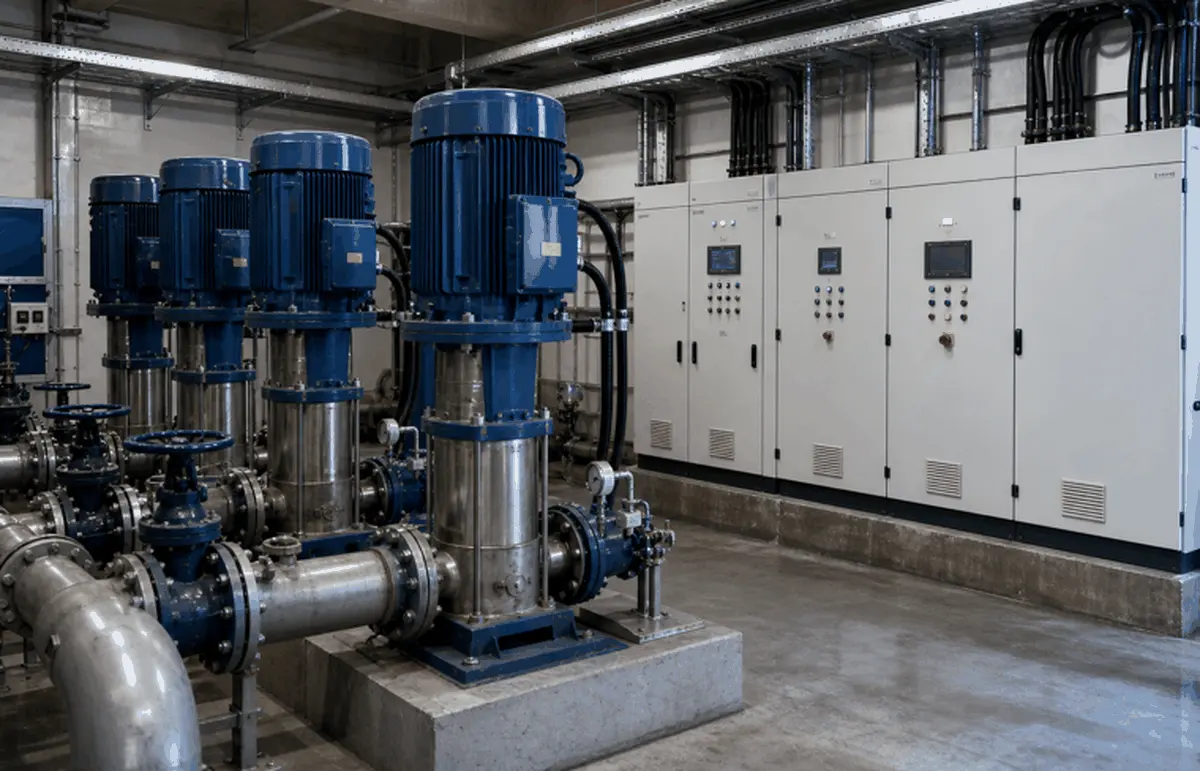
A control-system retrofit risk assessment should identify unknown logic, obsolete hardware, missing drawings, cutover constraints, rollback options and acceptance criteria before work begins.
Key Questions
- What behaviour exists only in the running old system?
- How long is the real stop window?
- What is the rollback path if commissioning fails?
Implementation Path
- 1Survey hardware, software, wiring and operating habits.
- 2Pre-test panels, software and communication before cutover.
- 3Define go/no-go criteria, rollback and acceptance evidence.
Related Systems and Entities
Identify unknowns before pricing the retrofit
Old PLC programs, undocumented field wiring, obsolete modules and operator habits must be reviewed before scope is fixed. Unknowns should become explicit assumptions or survey tasks.
Protect the cutover window
Pre-build panels, test software, prepare cables and define go/no-go criteria before the stop window. Time lost during cutover is far more expensive than preparation time.
Plan rollback and acceptance
A retrofit plan should explain what happens if commissioning fails: how to revert, who decides, what functions are required for acceptance and what documents close the project.
FAQ
What is the biggest risk in a legacy control retrofit?
The biggest risk is usually undocumented behaviour in the old system, not the new PLC hardware.
Can retrofit risk be eliminated?
No, but it can be bounded with survey, FAT, staged cutover, rollback planning and clear acceptance criteria.
Industrial Software, Remote O&M & Legacy Upgrade
Remote service, SCADA access, smart factory visualization, energy management and practical upgrades for aging control systems.